Barely a decade has passed since the family winery Torre del Veguer, in Sant Pere de Ribes, made a firm commitment to organic agriculture. This commitment to a more sustainable and environmentally friendly agriculture began with the 2010 Xarel•lo variety.
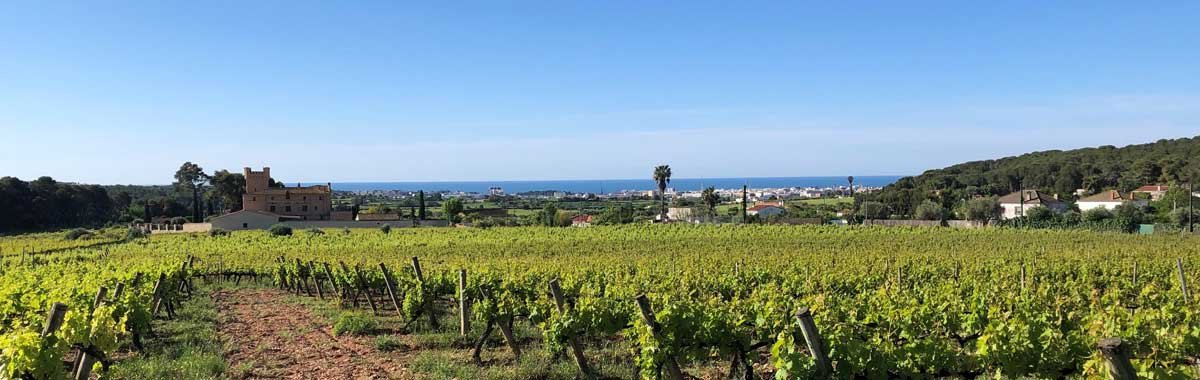
Marta Estany, the winery’s CEO and Winemaking Director, stresses that “the first thing you need to make good wine is to have good grapes.” She also notes that “we have learned to understand and manage our vineyards with the transition to working organically.” The added difficulty for Torre del Veguer is to organically treat vineyards that are so close to the sea, as humidity is a factor that makes this practice much more difficult. To avoid creating spaces with humidity or darkness, a source of fungi and diseases, we must have the vines extremely well ventilated. Organic agriculture involves additional human labor.
Since 2018, Torre del Veguer’s wines are also suitable for vegans. Today the winemaking philosophy at Torre del Veguer is one of minimal intervention: no added sugar, only the residual sugar from fermentation, no sulfites or the minimum possible, and some unfiltered and unfined wines. The main objective, according to Joaquim Gay de Montellà, is “to obtain the maximum expression of the terroir and the vineyard, to produce clean, honest wines that speak of the land they come from.” In addition, they are centered around native Mediterranean varieties such as Malvasia from Sitges, Xarel•lo, Red Xarel•lo, Muscatel and Garnacha.
High altitude vineyards in response to climate change
Twelve years ago they started planting grapes in Cerdanya (Girona), a groundbreaking winegrowing project in Catalonia at high altitudes, over 1,200 meters above sea level. These experimental high-altitude vineyards, in fact, are the response to the effects of climate change, planting vines at higher altitudes to obtain wines with high acidity and freshness. They have continued to plant more vineyards despite the difficulties of high altitudes, the result of a viticulture they call heroic. The usual early and late frosts, summer hailstorms and the action of wild animals are elements they have to fight against every year.